
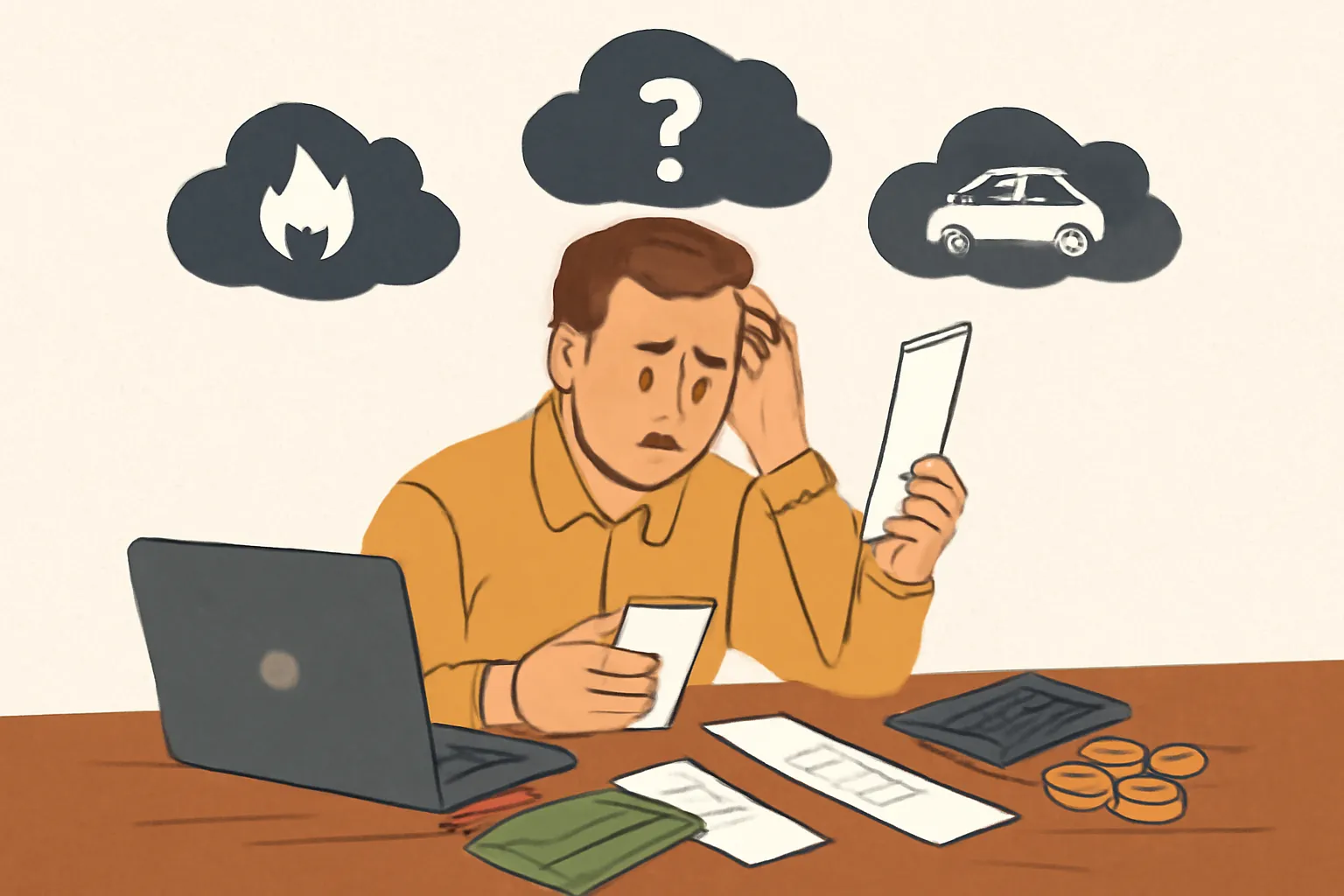
How to Manage Unexpected Expenses in 2025: A Practical, Proven Guide
Life has a talent for throwing curveballs. A surprise car repair, a sudden medical co-pay, an urgent home fix, a lost laptop you rely on for work—these are the moments that test your financial resilience. If you’re wondering how to manage unexpected expenses, 2025 offers both new challenges and new tools. This guide gives you a modern, comprehensive strategy for handling unforeseen costs, dealing with surprise bills, and controlling emergency outlays without derailing your long-term goals.
Below you’ll find a complete playbook: how to triage an expense the moment it appears, proven ways to reduce the bill, smart use of credit, automation and buffers that prevent future shocks, and the behavioral tactics that keep you calm and effective. Use the sections most relevant to you—or read straight through for a full system that can help you manage unexpected expenses more confidently this year.
The 2025 Backdrop: Why Surprise Bills Can Feel Bigger
In 2025, household finances are influenced by shifting prices, evolving insurance designs, and rapid payment technologies. Prices for essentials can fluctuate, deductibles and co-insurance remain common, and digital payment rails make it easier to spend or be charged in seconds. The result: surprises may arrive faster and feel larger. Fortunately, interest-bearing savings options, budgeting automation, and improved consumer protections can help you absorb shocks if you plan ahead.
- Real-time payments and instant transfers can increase the speed at which cash leaves your accounts—so alerts and buffers matter more.
- Insurance plan complexity (deductibles, co-insurance, networks) means knowing your coverage can cut thousands off medical or repair costs.
- Higher-yield savings options compared with traditional accounts can help your emergency fund keep pace with inflation; rates vary, so compare often.
The key to managing surprise expenses in this environment is to combine fast triage with pre-built buffers and intentional spending controls.
What Counts as an “Unexpected Expense” in 2025?
Not all surprises are the same. Categorizing helps you pick the right tactic for each type of cost:
- Emergency safety issues: Medical treatment, car brake failure, burst pipe, data recovery for mission-critical work.
- Essential function repairs: Appliance breakdowns (fridge, HVAC), laptop replacement, phone repair if required for work or safety.
- Income disruptions: Reduced hours, job loss, delayed payments from clients.
- Legal or compliance costs: Traffic fines, licensing fees, tax underpayments.
- Family obligations: Urgent travel, caregiving supplies, school-related fees.
Sorting expenses into these buckets clarifies whether to use an emergency fund, a sinking fund, insurance, or short-term financing. It also helps you decide how aggressively to cut other spending and how fast to replace used savings.
The Immediate 24–48 Hour Playbook When a Surprise Bill Hits
Here’s a step-by-step triage for how to handle unexpected expenses without panic.
- Pause and verify: Confirm the bill is accurate and legitimate. Check for duplicates, wrong coding (especially medical), or add-ons you don’t need.
- Classify the expense: Safety-critical now? Essential but can wait a week? Important but can wait a month? This determines urgency.
- Use the cheapest money first:
- Existing emergency fund or sinking fund in a high-yield savings account.
- Flex spending accounts (FSA) or Health Savings Accounts (HSA) if eligible and applicable.
- 0% grace-period credit card (if you can pay before interest accrues).
- Reduce the bill before paying:
- Ask for a cash discount or member rate.
- Request an itemized invoice and remove nonessential or incorrect line items.
- Check insurance coverage, warranties, or consumer protections.
- Negotiate a payment plan:
- Say: “I intend to pay this, but a lump sum is tough. Can we set a no-interest plan at $X per month?”
- Always confirm terms in writing and calendar the due dates.
- Activate short-term savings mode:
- Freeze discretionary categories for 2–4 weeks: dining out, entertainment, impulse retail.
- Pause subscriptions you won’t use immediately.
- Schedule a 30–90 day rebuild of your cushion to prevent the next surprise from hitting harder.
Cash Cushion Architecture for 2025
If you want to manage unexpected expenses with less stress, build your buffers in layers.
Layer 1: Emergency Fund (Core Cushion)
- Target: 1 month of bare-bones expenses to start; grow to 3–6 months. Households with variable income or dependents may prefer 6–9 months.
- Where: A high-yield savings account with FDIC/NCUA insurance where applicable. APYs change often; compare periodically.
- Structure: Keep a small “hot” slice in checking for speed, the rest in a separate savings account to avoid accidental spending.
- Funding: Automate a transfer right after each paycheck, even if it’s small. Consistency beats intensity.
Layer 2: Sinking Funds (Predictable-but-Irregular Costs)
These are mini-buckets for categories like car maintenance, travel, gifts, annual insurance premiums, and device replacement.
- Method: Estimate the yearly cost, divide by 12, and auto-transfer monthly into separate labeled sub-accounts.
- Result: Your “unexpected” expenses become expected and painless.
Layer 3: Micro-Buffers (Friction Against Overspending)
- Set transaction alerts and daily balance pings from your bank.
- Use spending limits per merchant or category if your card or app allows.
- Enable “virtual cards” for risky merchants to reduce fraud surprises.
Should You Tap Investments to Cover a Surprise Bill?
When deciding how to handle a sudden expense, consider the cost of the money you’ll use:
- Tax-advantaged retirement accounts often trigger taxes and penalties if accessed early; consider them a last resort.
- Taxable brokerage can be an option, but selling may create capital gains. Compare the tax cost to interest you’d pay on alternatives.
- If the charge is small and short-term, a 0% APR promotional card or a low-rate personal loan (if you qualify and can pay quickly) may be cheaper than realizing investment gains and losing market exposure.
When in doubt, compare after-tax costs and consider your time horizon.
Reduce the Size of the Bill: Negotiation and Assistance Tactics
Before you pay, exhaust options to lower the bill. This is one of the most powerful ways to manage unexpected expenses.
Universal Negotiation Script
Try: “I want to resolve this today. If I pay in full now, is there a cash or prompt-pay discount? If not, can we set up a 0% payment plan?”
- Ask for itemization and challenge unclear fees.
- Offer a specific number after asking for theirs; anchor lower but reasonable.
- Get everything in writing and confirm that timely payments will be reported positively (if applicable).
Medical Bills
- Request an itemized bill and ask for coding review if something looks off.
- Check your Explanation of Benefits (EOB) and ensure in-network rules were applied correctly.
- Ask about financial assistance or charity care if the provider offers it.
- In the U.S., some protections (such as the No Surprises Act) limit certain out-of-network emergency charges; verify current rules in your area.
Auto and Home Repairs
- Get two to three quotes. Many shops match prices or offer coupon pricing.
- For large repairs, ask “What’s the minimum safe fix to drive/live safely while I budget for the rest?”
- Check warranties, recall notices, and insurance endorsements (e.g., roadside assistance, rental car coverage).
Utilities, Telecom, and Subscriptions
- Call retention lines: “